
Hip Replacement FAQs
Chad Watts, MD
NOW OPEN - ROC Express in Fernley and ROC Express in South Reno, just off Mt. Rose Highway. Urgent orthopedic care in more convenient locations.
ROC Express
This approach uses a small incision at the front of the hip, allowing Dr. Watts to reach the joint between muscles instead of cutting through them.
Benefits include:
Dr. Watts has performed thousands of successful anterior hip replacements.
Most patients go home the same day after their joint replacement.
If your surgery is at Reno Orthopedic Surgery Center (ROSC), you’ll be up walking and practicing stairs within an hour and typically ready to go home within two hours.
If you have medical conditions or need extra help at home, your surgery can be done at a hospital where you may stay overnight.
Most hip replacements take 30–40 minutes, plus time before and after for anesthesia.
You’ll be full weight-bearing right away. Most patients are walking within an hour of surgery.
You may drive once you feel comfortable, walking well, and off narcotic pain meds
Most patients return to favorite activities such as biking, hiking, golf, skiing, pickleball, or horseback riding. There are no long-term restrictions.
Hip replacement is frequently referred to as the most successful surgery in all of medicine. At ROSC, we’re proud of our low complication rates and high patient satisfaction, reflected in multiple national awards.
Your preparation helps ensure a smoother recovery.
PT is optional for hip replacements. If you’d like to do it, plan to start 2–3 weeks after surgery.
Pain should be expected, but Dr. Watts uses less invasive techniques—like the direct anterior hip and quad-sparing knee approaches—to make recovery easier.
Your pain plan will be personalized and may include:
We’ll review your pain plan before surgery and send prescriptions to your pharmacy. Ice machines are especially helpful after knee replacements.
Most modern hip replacements include: 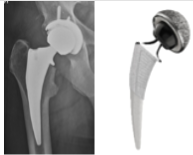
Modern hip replacements are expected to last 50–60 years for most patients.
Dr. Watts uses intraoperative fluoroscopy for real-time imaging—providing precise implant positioning, which is how we get the sizing and leg lengths as close as possible.
He also uses a special femoral impactor system that reduces the risk of bone fracture during surgery.
You will receive a short general anesthetic, as well as a long-acting local anesthetic injected into the surgical site during the surgery.
Misty (surgery scheduling): (775) 788-5221
Cynthia (medical assistant): (775) 785-3040k
MyChart: for most questions
After-hours urgent line: (775) 786-3040
Online Scheduling: renoortho.com